| Updated:
The UN’s global financial fund has called on Chancellor Rachel Reeves to drop the triple lock pension and draw up “contingency” tax measures to ensure that public debt is reduced as a share of GDP.
The International Monetary Fund has said that there are “risks” around spending forecasts and tax receipts, criticising the Chancellor for relying on “ambitious efficiency savings targets”.
It added that the increases in receipts depend on “sizeable but uncertain yields” from HMRC administrative efforts to narrow the tax gap.
Its latest report on the state of UK public finances and the wider economy the group said: “In case the consolidation is pushed off course, contingency measures on both sides should be formulated in advance.”
It said the government should consider simplifying the tax regime by broadening the VAT base and reforming property taxes, echoing similar demands from the OECD.
The fund’s economists also said the welfare bill should have better controls in order to keep planned deficit reductions in place.
One key reform recommended over the longer term would be to replace the triple lock pension “with a policy of indexing the state pension to the cost of living”.
The triple lock means the state pension rises by whichever is highest out of wage growth, inflation or 2.5 per cent. Several leading economists, including Office for Budget Responsibility chiefs, have labelled the mechanism “unsustainable” for public finances as it has cost three times as much as originally predicted.
Pressures for higher defence spending, supporting an ageing population and net zero expenditure could add to constraints on public finances over the coming years.
IMF analysis suggested these factors could raise public spending by about 6 per cent of GDP by 2050.
Tax reform is ‘fundamental’
Further increases in taxes to support spending increases could be problematic given the tax burden was rising to a post-World War II high, making sweeping tax reforms and introducing further spending efficiencies “fundamental” for reducing the deficit.
The government spent around £110bn on servicing debt, with ongoing Labour leadership speculation fuelling concerns that the cost of interest payments to lenders could spike further and add constraints on public finances.
The IMF slightly revised up its growth forecast for the year to one per cent while suggesting that inflation would peak at “just below four per cent” later this year” before easing in mid-2027.
The last IMF report said growth this year would be 0.8 per cent as the UK suffered a bigger downgrade than any G7 nation.
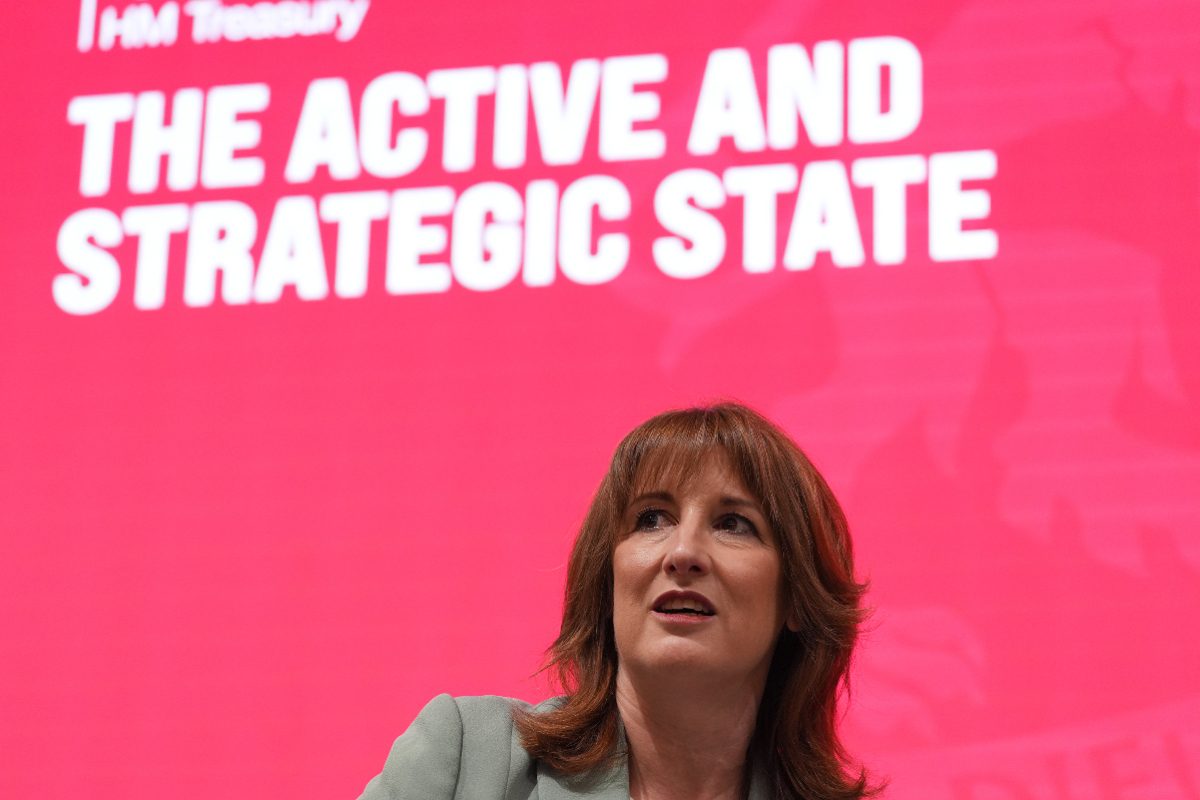
Rachel Reeves said: “The IMF upgrading its growth forecasts and backing our fiscal strategy is yet more proof that this Government has the right economic plan.
“The choices I have made as Chancellor mean our economy is in a stronger position as we deal with the costs of the war in Iran. Putting our stability at risk when signs of progress are emerging would leave families and businesses worse off.
“Instead, this Government is getting on with the job of building an economy that is stronger, more resilient, and prepared for the future.”
Analysts at the fund also said the Bank of England could leave interest rates unchanged this year to limit a surge in inflation expectations and wage growth.