
In recent months, a disturbing pattern has emerged across Nigeria’s digital space: videos of trusted public figures endorsing schemes that promise extraordinary returns—only for victims to discover, too late, that the endorsements were never real. These scams are not new. But recent technology has helped them evolve to dangerous levels. What once relied on static images and poorly written captions has now become far more sophisticated: AI-generated videos and cloned voices that mimic real personalities with such accuracy that makes it harder for even the subjects to detect.
Notable figures who have been used in such manipulated content include Africa’s richest man, Aliko Dangote; Nigeria’s former finance minister and current World Bank president, Ngozi Okonjo-Iweala; Nigeria’s president, Bola Ahmed Tinubu; former First Bank board chairman, Ibukun Awosika; TV personalities like Rufai Oseni; Tosin Olaseinde of Money Africa; and Fela Durotoye, among others.
In one recently exposed case, a victim who spoke during an Instagram exchange with Rufai Oseni said he invested N80,000 with the promise of receiving N1.6 million within a month. On the surface, the offer appears implausible. But when presented as coming from a globally recognised figure like the World Bank president, scepticism may give way to trust.
Since May 2025, there have been over 1,000 posts on X alone from different people who have been exposed to, and fallen prey to similar promotional material.

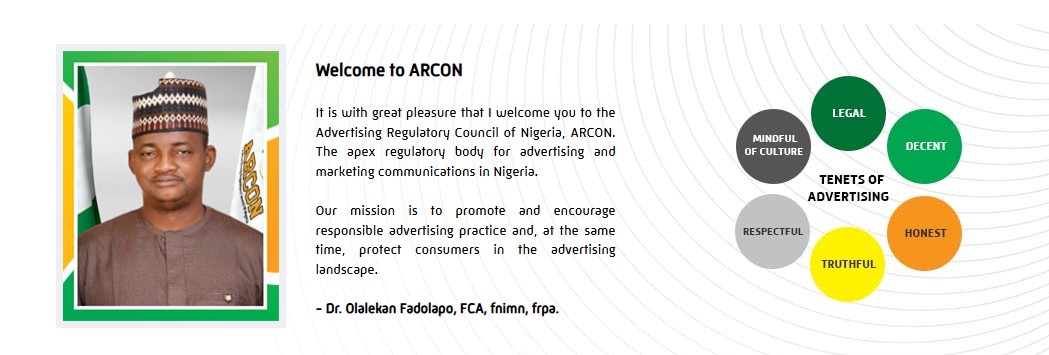
Incidences like this were part of the reason the Advert Regulatory Council of Nigeria (ARCON) in 2025, mandated that all digital adverts must be vetted and approved before exposure. On paper, the move was timely, aimed at protecting consumers and enforcing accountability among advertisers.
“No advertisement under the vetting category should be exposed unless a certificate of approval from the ASP, signed by the Director General of ARCON has been received by the applicant or media house” the guidelines read.
But as deepfake technology becomes increasingly accessible, there is now a more difficult question to answer: can a regulatory system designed for traditional media keep pace with the speed, scale, and sophistication of digital advertising?
How the current framework operates
Marketing executives who spoke with BusinessDay described a process that is structured but not fast enough for the digital space. Businesses are required to submit an application letter addressed to the Director General of ARCON, alongside completed vetting forms and payment receipts.
“Each application costs 35,000 per concept in traditional advertising, while online adverts cost N20,000 per concept and it takes about 10 working days to get approval. Accelerating the approval of concepts costs more. For instance, if you want to accelerate 4 concepts, you are required to pay N400,000 to have it approved within 8 working hours, or N250,000 to get approval in 16 working hours” a source explained.
Applications are sent via designated email channels, after which advertisers wait for approval before going live. The process applies across both digital and traditional formats, regardless of whether content uses human models or AI-generated elements, although the fees differ across categories.
In traditional media, the system largely works. Television stations, radio platforms, and billboard operators typically require proof of approval before airing or displaying advertisements. Online, however, enforcement is playing out differently.
Millions of small and medium-sized businesses continue to publish ads across social media platforms without regulatory approval. Platforms such as Meta and Google do not require ARCON certification before allowing ads to go live.
While there is no confirmed figure for the number of ads published daily, a 2024 SaveMyLeads report estimates that Facebook alone reviews over 5 million new ads daily. Once approved by the platform, these ads can run for extended periods unless flagged.
A Reuters investigation further revealed that up to 15 billion scam ads are viewed on Facebook daily, with an estimated 10 percent of the platform’s ad revenue linked to content showing clear signs of fraud.
Further breakdown shows that while China accounts for 1 in 4 of such ads, other countries including Nigeria, account for a significant portion of investment fraud ads, phishing and similar schemes. These data point to a critical need for an advert regulatory system that caters to the digital space.
Rethinking a system that works for the digital space
Even though many of these fraudulent ads relate to investment schemes, the Securities and Exchange Commission (SEC) does not directly regulate advertising content. Its mandate focuses on overseeing capital markets and issuing public warnings about suspicious schemes.
Responsibility for advertising oversight remains with ARCON under its 2022 Act. While the regulator has yet to publicly outline a detailed digital enforcement strategy, sources close to ARCON indicate that internal work is ongoing.
“ARCON has been existing for years, since 1988 as APCON before becoming ARCON in 2022, and even though they have tried to regulate the online space, there was always a question of jurisdiction. It was only in April 2025 that a court ruling finally gave ARCON the right to oversee the online space. It is barely a year since that court ruling and that is barely enough time to have an infrastructure in place that would cater for a dynamic online space”, an industry player told BusinessDay.
The source, who pleaded anonymity as he was not an official spokesperson, added that with the fragmented online ecosystem, regulation could prove difficult.
“I am not authorized to speak on this, but I know that ARCON is working on something that will work fast and speedily to cater to the online space. You know the online space, things move fast and businesses might want to jump on trends… asking such a brand to wait one week for approval will not be practical.”
He added that beyond infrastructure, building enforcement capacity would be critical. The source also referenced tensions within the industry, including the withdrawal of the Advertising Association of Nigeria (ADVAN) from the Heads of Advertising Sectoral Groups (HASG) in 2025, noting that collaboration would be essential to building an effective system.
“Nigeria is one of the biggest markets in Africa, if not the biggest, but our advertising industry is not in the top two because of several issues happening here that need to be addressed, and these issues cannot be addressed with some stakeholders pulling out,” he said.
Experts describe what a working system would look like
Stakeholders say the solution will require more than just stricter rules—it will require a redesign of how regulation works in a digital environment. One proposal is the development of a centralised digital portal that allows advertisers to submit materials, receive preliminary clearance, and launch online campaigns while final approvals are processed within set timeframes.
In a chat with BusinessDay, Ridwan Oloyede, Emerging Tech and Policy Lead at TechHive Advisory, said such a system could integrate AI-powered detection tools.
“Developers can train these machine-learning tools to scan video and audio for synthetic anomalies, such as inconsistent lighting, unnatural eye movements, or audio-visual desynchronisation. However, we must recognise that detection faces a continuous arms race; as detection models improve, deepfake generators immediately adapt to bypass them. Therefore, such a detection tool would serve as a filter, not a silver bullet.”
Gbolabo Awelewa, a Digital Cybersecurity and Enterprise Technology leader, said layered detection systems would be more effective. These could include AI detection tools like Sensity AI and Reality Defender, audio-visual analysis, and metadata forensics to track editing patterns and software signatures that detect AI-manipulation. Materials could then be assigned risk scores—low-risk ads proceed quickly, while high-risk entries undergo deeper scrutiny.
“Deepfake detection should be treated the same way airports treat baggage screening. Machines flag suspicious items, but trained humans make the final decision.”
Such a system would also require transparency, including mandatory disclosure where AI tools are used in creating any part of the advertising content.
A key part of such a system would be data protection. Wuraola Taiwo, a data privacy expert who spoke to BusinessDay, explained that having a single portal where all creative work have to go through for approval requires a strong data protection system.
“Such a platform should be done with certain laws in mind – the data protection laws, the intellectual property laws and the FCCPC Act. If a firm balance is achieved between these relevant laws and the regulators powers, then we can effectively regulate digital advertisement” she said.
A system where advertisers are not anonymous
Beyond detection, experts emphasise the need for stronger identity verification. Stakeholders who spoke to BusinessDay proposed a Know Your Business (KYB) framework, ensuring that every advertiser is tied to a verified and traceable identity, either National Identification Numbers (NIN) or even Business registration numbers, before campaigns are approved.
“When scammers know the system forces them to reveal their true identities, the utility of the deepfake will collapse,” Oloyede said.
This may be part of the reason the existing system has worked for traditional advertising channels, and should be carried further into digital regulation.
There are also calls for incentive-based compliance models—where brands with strong compliance histories receive faster approvals or visible trust ratings.
Towards a risk-based model
Another approach under consideration is risk-based vetting. Under such a system, high-risk sectors like financial services, health products, and investment schemes, would face stricter scrutiny, while low-risk categories like fashion accessories could move through faster approval channels.
This would allow regulators to focus resources where consumer harm is most likely, without slowing down the broader advertising ecosystem.
Stakeholders also recommend effective collaboration with other regulators like the Securities and Exchange Commission (SEC), National Food and Drugs Administration and Control (NAFDAC), to better protect consumers.
Finding the balance
At its core, the challenge is not whether Nigeria should regulate digital advertising, but how. An effective system must protect consumers from increasingly sophisticated deception even as the criminals adapt quickly, while allowing legitimate businesses to operate at the speed of the digital economy.
Because in the deepfake era, consumer protection will depend not just on detecting misleading content—but on building a regulatory system that can move as fast as the technology it is meant to control.
Ruth Okwumbu-Imafidon
Ruth Okwumbu-Imafidon is a seasoned journalist and communications strategist with over a decade of experience telling impactful stories across environment, technology, entrepreneurship, business, and political economy. At BusinessDay, she leads editorial partnerships and content initiatives that deepen public understanding and spark meaningful conversations on issues shaping Nigeria’s socio-economic landscape. She holds an MSc in Mass Communication from the University of Nigeria, Nsukka, and a BSc in Mass Communication from Delta State University.