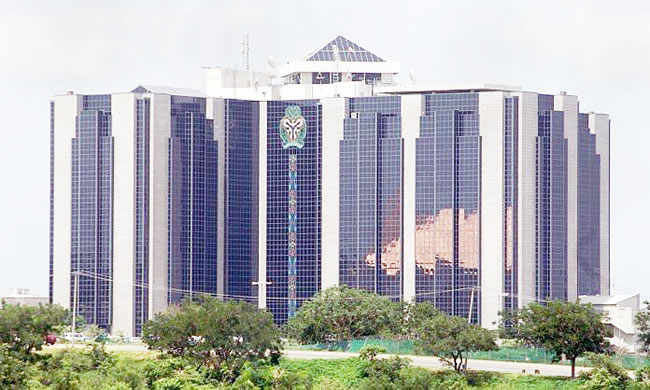
The Central Bank of Nigeria (CBN) has partially relaxed its 2024 cashless policy on Personal Travel Allowance (PTA) and Business Travel Allowance (BTA), introducing a 25 percent cash dollar payment option under the revised Foreign Exchange (FX) Manual set to take effect from June 1, 2026.
Under the new framework, 75 percent of PTA and BTA disbursements will continue to be processed electronically through debit and credit cards, while 25 percent may now be paid in cash dollars.
The revision marks a shift from the apex bank’s earlier directive issued in 2024, which prohibited cash payment of PTA and BTA in a move aimed at promoting transparency, strengthening stability in the foreign exchange market, and curbing malpractices.
At the time, the CBN directed all Authorised Dealer Banks to process PTA and BTA exclusively through electronic channels in line with memorandum 8 of the FX Manual and circular FMD/DIR/CIR/GEN/08/003 dated February 20, 2017.
The new 25 percent cash option represents a partial easing of that strict cashless regime as the Central Bank continues broader reforms of Nigeria’s foreign exchange market.
The adjustment forms part of the 4th Edition of the CBN FX Manual, which replaces the 2018 version and introduces several changes aimed at improving operational efficiency, market transparency and investor confidence.
The revised manual increases allowable advance payments for imports from 15 percent to 30 percent and provides for free processing of Form NXP. It also introduces provisions covering service exports, Pan-African Payment and Settlement System (PAPSS) transactions and non-resident investment accounts.
In addition, the framework permits tuition fee payments of up to $25,000 per semester for undergraduate and postgraduate studies abroad and allows payments for services and charges denominated in foreign currency.
The revised guidelines further provide unrestricted access for export proceeds holders and ordinary domiciliary account holders, while removing the requirement for Form A in domiciliary remittances.
Olayemi Cardoso, governor of the CBN said the updated FX Manual aligns with international best practices and reflects the apex bank’s commitment to strengthening Nigeria’s macroeconomic foundations and enhancing transparency in the FX market.
According to him, the revised framework is designed to modernise Nigeria’s foreign exchange administration, improve market clarity and consistency, and reinforce confidence among investors and market participants.
Analysts said the latest revisions suggest the CBN is seeking to balance its digital payment objectives with greater market flexibility as Nigeria continues efforts to stabilise the FX market and improve access to foreign currency for legitimate transactions.
Hope Moses-Ashike
Hope Moses-Ashike is an Associate Editor, Banking and Finance, with more than a decade of experience reporting on Nigeria’s financial system and broader economy. She closely tracks market movements, monetary policy decisions, company disclosures, regulatory actions, economic indicators, and global developments, and interprets what they mean for businesses, investors, policymakers, and households. Her reporting helps readers understand complex issues such as inflation trends, foreign exchange market dynamics, interest rate decisions, bank performance, and investment risks. She also covers major international events and periodically travels to Washington, D.C., to report on the World Bank/IMF Spring and Annual Meetings. Her dedication to financial journalism has earned her multiple recognitions and invitations to high-level professional development programmes. She is an alumna of the International Visitors Leadership Programme (IVLP) in the United States and holds an Advanced Financial Journalism Certificate from the Press Association Training in London, UK. Her other notable achievements include completing the Lagos Business School CMC Programme, the Bloomberg Media Africa Initiative Programme, and a Master Class in Journalism at Rhodes University in South Africa.