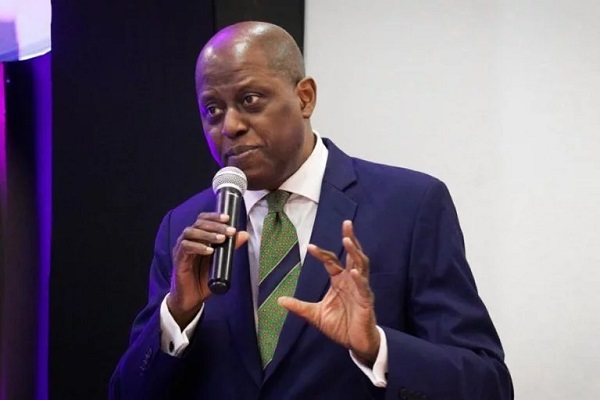
Nigeria’s net external reserves surged by 772.18 percent in two years to $34.80 billion at the end of 2025 from $3.99 billion in 2023, according to Olayemi Cardoso, governor of the Central Bank of Nigeria (CBN).
Cardoso disclosed in a statement on Monday that the sharp rise in net reserves reflects what he described as a fundamental improvement in the quality of the country’s external buffers. He noted that the 2025 net reserve position alone surpassed the total gross reserves recorded at the end of 2023, which stood at$ 33.22 billion.
He attributed the gains to increased transparency and credibility in foreign exchange management, which he said has boosted investor confidence, attracted stronger FX inflows and enhanced reserve management practices focused on capital preservation, liquidity and long-term sustainability.
Providing further breakdown, he said net reserves increased from $23.11 billion at the end of 2024 to $34.80 billion at the close of 2025. Over the same period, gross external reserves rose to $45.71 billion from $40.19 billion, an increase of $5.52 billion.
According to him, the expansion highlights Nigeria’s improved capacity to meet external obligations, support exchange rate stability and strengthen overall macroeconomic resilience.
Cardoso had earlier indicated at the post Monetary Policy Committee press briefing held on February 24, 2026, that gross external reserves stood at $50.45 billion as of February 16, 2026. At the weekend, he reiterated that net foreign exchange reserves had climbed to $34.80 billion as of the end of December 2025.
The CBN governor described the end-2025 reserve position as strong validation of the Bank’s ongoing policy reforms and external sector adjustments, adding that the improvement represents a substantial strengthening in both the level and quality of Nigeria’s external buffers over the past three years.
He reaffirmed the apex bank’s commitment to maintaining adequate reserve buffers, supporting orderly foreign exchange market operations, reinforcing confidence in Nigeria’s external position and sustaining macroeconomic stability in line with its statutory mandate.
Hope Moses-Ashike
Hope Moses-Ashike is an Associate Editor, Banking and Finance, with more than a decade of experience reporting on Nigeria’s financial system and broader economy. She closely tracks market movements, monetary policy decisions, company disclosures, regulatory actions, economic indicators, and global developments, and interprets what they mean for businesses, investors, policymakers, and households. Her reporting helps readers understand complex issues such as inflation trends, foreign exchange market dynamics, interest rate decisions, bank performance, and investment risks. She also covers major international events and periodically travels to Washington, D.C., to report on the World Bank/IMF Spring and Annual Meetings. Her dedication to financial journalism has earned her multiple recognitions and invitations to high-level professional development programmes. She is an alumna of the International Visitors Leadership Programme (IVLP) in the United States and holds an Advanced Financial Journalism Certificate from the Press Association Training in London, UK. Her other notable achievements include completing the Lagos Business School CMC Programme, the Bloomberg Media Africa Initiative Programme, and a Master Class in Journalism at Rhodes University in South Africa.