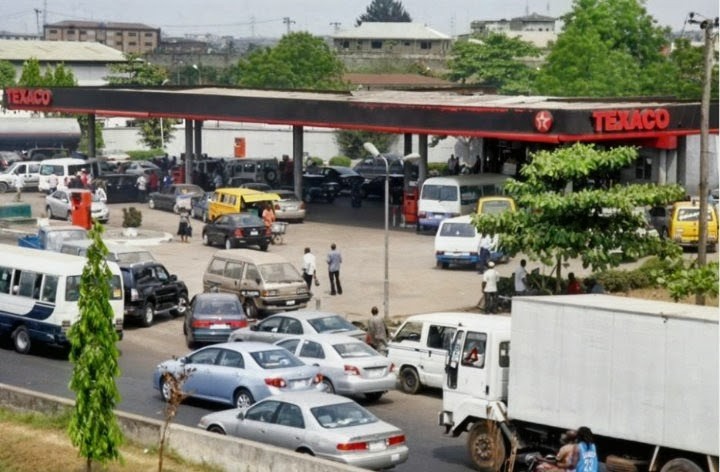
Rising oil prices are once again testing Nigeria’s economy. But this time, there is no subsidy to absorb the shock.
With fuel subsidies removed in 2023, Nigeria no longer shields its economy from global oil shocks. As crude prices climb amid renewed tensions in the Middle East, the effects are feeding directly into domestic fuel costs, transport fares, and food prices.
This marks the first real external test of the country’s post-subsidy framework.
Shock without a buffer
The mechanics are straightforward. Higher global oil prices increase the cost of refined fuel imports. Without government intervention, those costs pass through to consumers almost immediately. Petrol prices rise, transport costs follow, and inflationary pressure spreads across supply chains.
“Fuel prices sit at the center of Nigeria’s cost structure,” said a Lagos-based macroeconomist. “Once they move, transport follows, then food. It spreads quickly across the economy.”
Under the previous system, the government absorbed part of the increase through subsidies, softening the blow for households while straining public finances. That buffer is now gone. Prices adjust faster, and the burden falls directly on consumers and businesses.
The oil paradox
Higher global oil prices should, in theory, give Nigeria a cushion through stronger fiscal revenues and improved foreign exchange inflows. In practice, that benefit is limited. Oil production remains below capacity, and most refined fuel continues to be imported.
Read also: Oil prices drop 2% as Iran considers US proposal to end war – Reuters
“This is why Nigeria is not fully benefiting from higher oil prices,” said Olugbenga Olaoye, an energy economist and member of USAEE. “The country exports crude but still imports fuel, so rising prices increase both revenues and costs at the same time.”
As crude prices rise, import costs increase alongside them. The net effect pushes inflation up rather than boosting economic growth.
Inflation through the back door
Early signs are already visible. Fuel price adjustments are feeding into higher transport costs, which push up food prices and consumer inflation. The impulse is external, but the impact is domestic and immediate.
Subsidy removal addressed a fiscal problem, not a structural one.
Structural limits remain
Domestic refining capacity is still limited. Aside from the Dangote Refinery, which has begun supplying a growing share of Nigeria’s gasoline market, most government-owned refineries remain offline. Oil output is weighed down by theft and underinvestment, while infrastructure gaps continue to raise the cost of moving goods.
These weaknesses cap the benefits of higher oil prices while leaving the economy exposed to their costs.
Read also: Why high oil prices hurt Nigerian households
A difficult policy trade-off
For policymakers, the challenge is clear. Maintaining full price adjustment preserves the credibility of the reform and supports fiscal stability, but it also intensifies pressure on households at a time when real incomes remain fragile.
“For many households, this is already at the edge of what is sustainable,” said Faruq Quadri, an economist at SPEC-Matrix, an Abuja-based research firm. “When fuel, food, and transport costs rise together, there is very little room to adjust. Without some form of targeted relief, the pressure compounds.”
“Full price adjustment is important for the credibility of the reform,” Faruq added. “But if incomes are not keeping pace, social pressure builds quickly. The challenge is finding support measures that do not quietly bring subsidies back.”
“The risk with intervention is that it distorts the price signal again,” he said. “Any response has to be precise and limited.”
The longer-term fix
The longer-term solution is clear: Nigeria needs to expand refining capacity, boost oil production, and strengthen foreign exchange buffers to reduce vulnerability to global price swings. Currently, with most government-owned refineries offline and only the Dangote Refinery supplying a large share of domestic fuel, the country still depends on imports.
Until these gaps are addressed, Nigeria remains trapped in a familiar cycle, earning more from crude exports while paying higher prices for fuel at home.
In the past, subsidies masked this dynamic. Today, the costs are fully visible, and Nigerians are feeling them.
Oluwatobi Ojabello
Oluwatobi Ojabello, PhD, is a dynamic and multi-dimensional Assistant Editor for Economy and Markets with over two years of professional journalism experience. He delivers authoritative, data-driven coverage of fiscal policy, financial institutions and capital markets, using clear analysis to explain Nigeria’s most complex economic developments. His work focuses on macroeconomic policy, financial stability and corporate performance, turning technical issues into accessible narratives that inform both experts and everyday readers.
