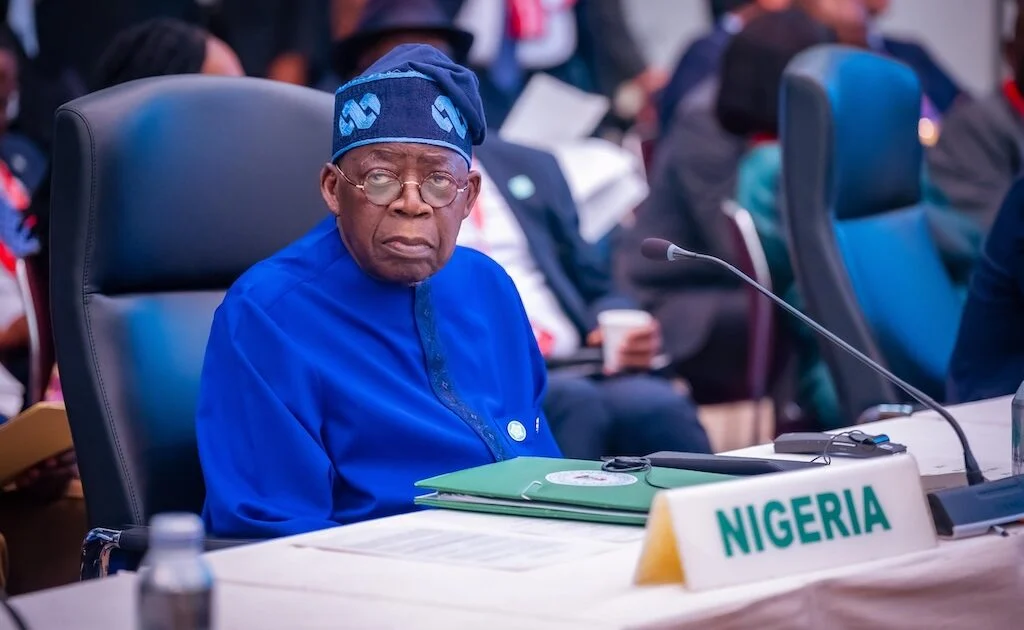
…as committee charts path for subnational export expansion
The Federal Government has reaffirmed its commitment to delivering measurable outcomes under the African Continental Free Trade Area (AfCFTA), as it intensifies efforts to deepen subnational export expansion and strengthen Nigeria’s leadership on the continent.
This was disclosed on Wednesday in Abuja by Jumoke Oduwole, Minister of Industry, Trade and Investment, at the First Quarter 2026 meeting of the AfCFTA Central Coordination Committee (CCC).
Oduwole, who was represented by Patience Okala, her Special Adviser, said 2026 would be a year of implementation and measurable performance rather than policy conceptualisation.
Read also: NDIC step up intermediation in AfCTA’s implementation
“This meeting comes at a pivotal moment where we consolidate Nigeria’s leadership under AfCFTA and strategically position our country ahead of the 14th Ministerial Conference of the World Trade Organization (MC40),” the minister said
She noted that momentum generated at the AfCFTA Public, Private and Press (P3) Summit in November 2025 had reinforced the need for coordinated, measurable and simplified implementation of the continental trade pact.
According to the minister, the committee reviewed tangible outcomes from the private, public and media engagements at the summit and presented Volume 1 of the ABC simplified tools developed by public sector members of the CCC.
She explained that the tool provides clear guidance on how Nigerian businesses can engage with AfCFTA institutions and leverage the agreement for business growth, investment opportunities and expanded regional market access.
Read also: AFCTA: Nigeria ‘s Trade negotiation office lists requirements for export to African countries
“AFCFTA implementation must be coordinated, measurable, simplified and driven by institutional accountability. Accordingly, today we will consider tangible outcomes from the private sector, public sector and press sessions of the P3 Summit. We have also presented Volume 1 of the ABC simplified tools, which the public sector members of the CCC painstakingly put together during and after the Summit.
“This tool features easy-to-read processes and clear guidance on how Nigerian businesses can engage with constituent members of the AFCFTA CCC and leverage the AFCFTA for business growth, investment and regional market access,” she said
Oduwole also disclosed that the committee received a report from its subcommittee on governance structure, stressing that clarity of roles, reporting lines and decision-making thresholds had become critical as implementation deepens.
“The AfCFTA CCC must function not merely as a coordinating forum but as a performance-driven mechanism aligned with our National Action Plan. The Institutional Performance Barometer must function,” she said.
The minister emphasized the need to move AfCFTA implementation beyond federal-level coordination to states, industrial clusters, special economic zones and export corridors.
She revealed that the Federal Ministry of Industry, Trade and Investment had intensified engagements with state governments, investment promotion agencies, MSME networks and productive clusters to align export readiness, standards compliance and logistics capacity with continental market opportunities.
Oduwole said Nigeria had also taken deliberate steps to prepare strategically for the upcoming 14th Ministerial Conference of the World Trade Organization (WTO), where global trade rules and reforms would be deliberated.
She recalled that African Ministers of Trade recently met in Maputo, Mozambique, in preparation for the conference to be hosted in Cameroon, where consolidated African positions were adopted on key issues including WTO reform, agriculture, digital trade, development concerns and investment facilitation.
She added that regional coherence under AfCFTA would strengthen Africa’s negotiating leverage in multilateral trade discussions.
The minister further stressed that Nigeria’s trade strategy remains aligned with President Bola Tinubu’s Renewed Hope Agenda, noting that reforms undertaken over the past two and a half years had stabilized the economy and positioned the country at an inflection point.
She highlighted significant growth in non-oil exports, particularly within Africa, describing the trend as evidence that focusing on continental markets could strengthen Nigeria’s economic resilience.
Oduwole announced that a subnational intervention tour would commence in April across the six geopolitical zones to promote competitiveness, raise export awareness and ensure that producers across the country understand market opportunities under AfCFTA.
“We must continue to produce, continue to work hard and take advantage of opportunities on the global stage. This is not the time to change course,” she said.
She added that the committee would continue to prioritize private sector feedback, particularly on reducing logistics costs, improving certification systems, expanding access to trade finance, deploying efficient payment systems and enhancing market intelligence.
“Finally, we must continue to listen closely to structured feedback from the private sector. Their priorities remain clear. Reduce logistics costs, transparent cost-effective and rapid certification systems, expanded access to trade finance, effective deployment of payment systems, and better market intelligence.
“Our responsibility is to translate feedback into systemic reform. Distinguished ladies and gentlemen, the work of this committee is not procedural. It is transformational,” Oduwole said.