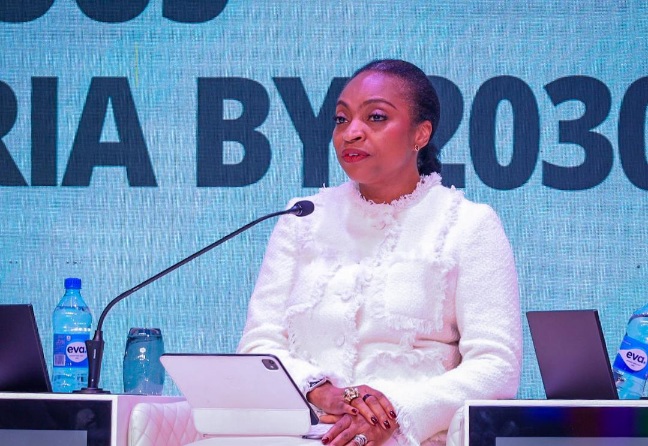
Jumoke Oduwole, minister of industry, trade and investment, says Nigeria attracted about $21 billion in capital importation in the first 10 months of 2025 — a sharp rise from $12 billion recorded in 2024 and less than $4 billion in 2023.
Oduwole disclosed this on Wednesday while defending the ministry’s 2026 budget proposal before the House of Representatives Joint Committee on commerce, industry and small and medium enterprises (SMEs).
Capital importation refers to the inflow of foreign funds used to finance investments, trade and manufacturing activities in a country.
$5bn in curated projects, 50 bottlenecks resolved
According to the minister, the rebound reflects deliberate efforts to convert policy into measurable economic outcomes.
“In 2025, the ministry focused on translating policy into real economic activity through greater coordination, engagement and practical facilitation,” she said.
She listed key interventions to include: Curation of over $5 billion in bankable projects, Creation of sector-specific deal rooms, Hosting Nigeria’s first domestic investors’ summit and Resolution of about 50 investor bottlenecks.
Read Also: Nigeria’s fiscal illusion: Why size has been mistaken for wealth
“These activities helped re-engage domestic capital and facilitated the resolution of about 50 investor bottlenecks, driving projects from intention to implementation,” she added.
The minister also said the ministry carried out more than 100 bilateral investment engagements in 2025, covering both new and traditional partners.
Countries highlighted include: United Arab Emirates, Brazil, Japan, United States, and United Kingdom
Oduwole noted that the Nigeria-UK economic and trade partnership, which began in the second quarter of 2024, significantly boosted inflows. She said UK investors accounted for about 65 per cent of Nigeria’s foreign capital inflows in 2025.
Trade surplus, exports up 11%
On trade performance, the minister said Nigeria posted a trade surplus in 2025.
Total trade reached about N113 trillion in the first three quarters of the year, while exports rose by roughly 11 per cent year-on-year to $6.1 billion — the highest on record in both value and volume.
Looking ahead, Oduwole said the ministry will anchor its 2026 agenda on the national development plan and three key frameworks:
- Nigeria’s trade policy (2023–2027)
- Nigerian investment policy (2023–2027)
- Nigerian industrial policy (2025–2035)
She said implementation will centre on deepening industrialisation, expanding non-oil exports and strengthening Nigeria’s overall investment climate.
Oluwatosin Ogunjuyigbe
Oluwatosin Ogunjuyigbe is a writer and journalist who covers business, finance, technology, and the changing forces shaping Nigeria’s economy. He focuses on turning complex ideas into clear, compelling stories.
